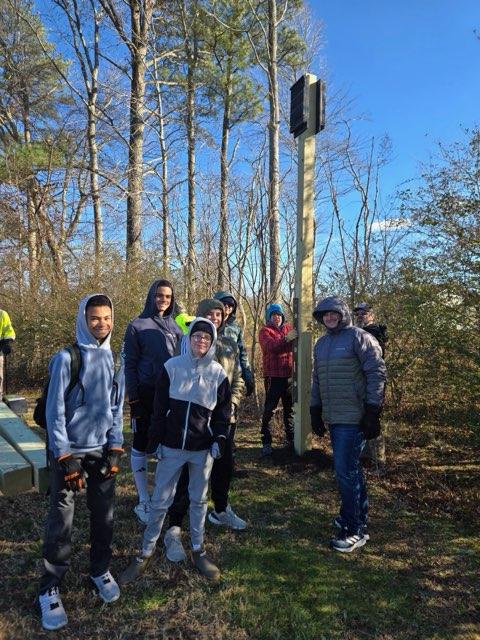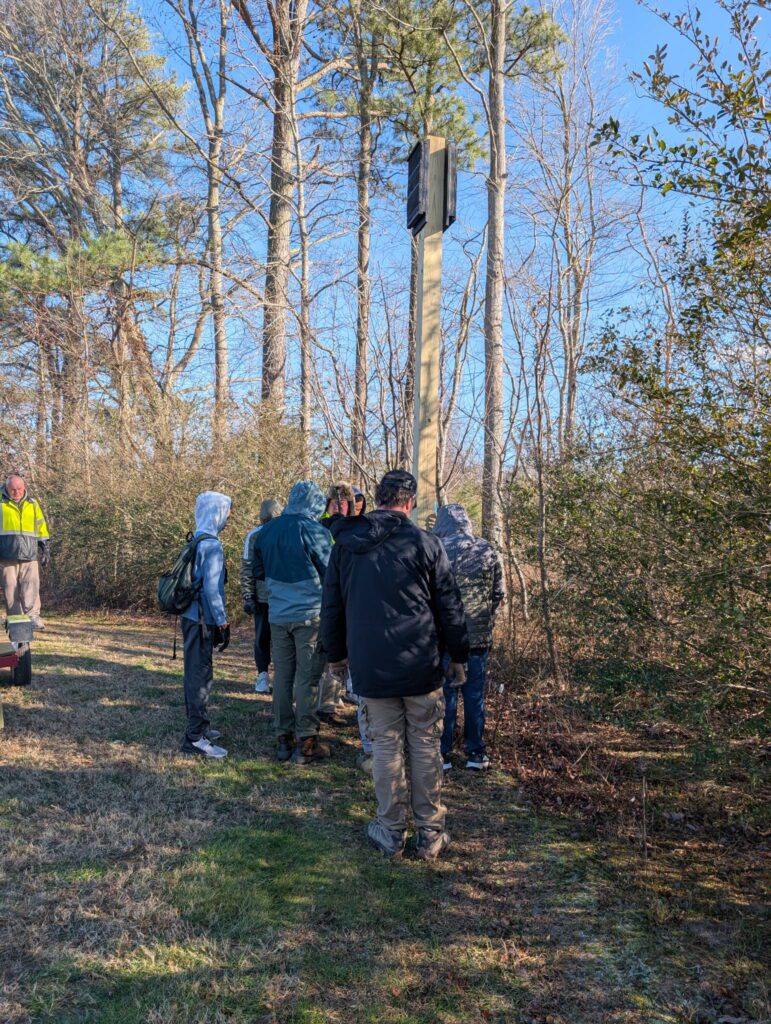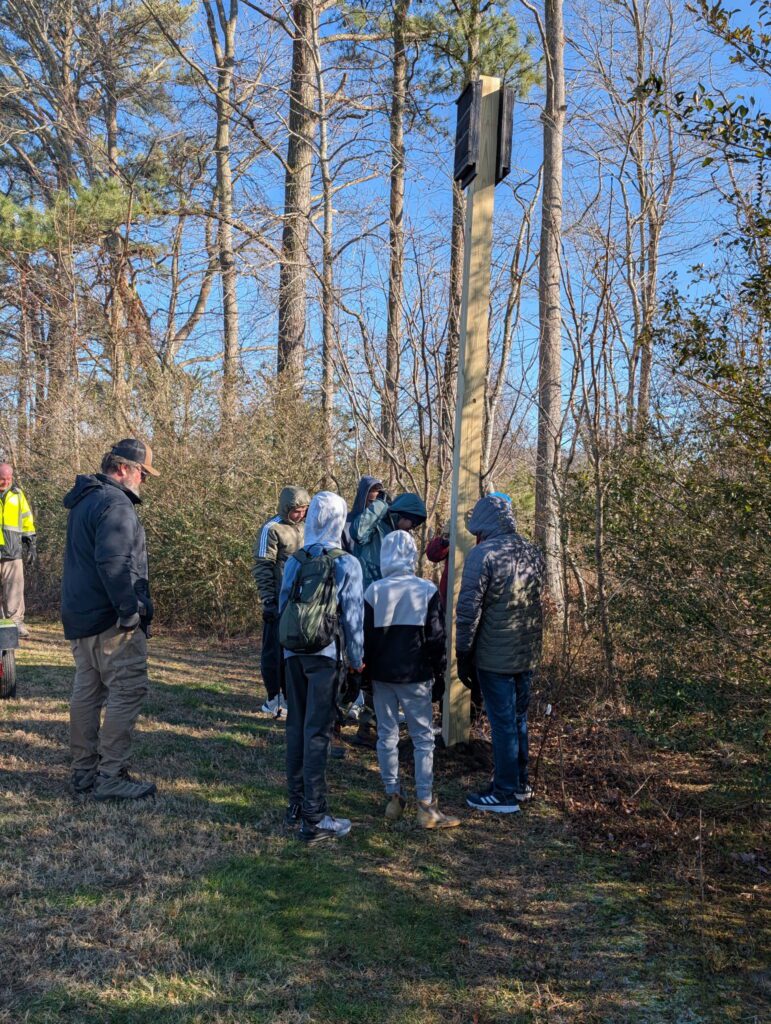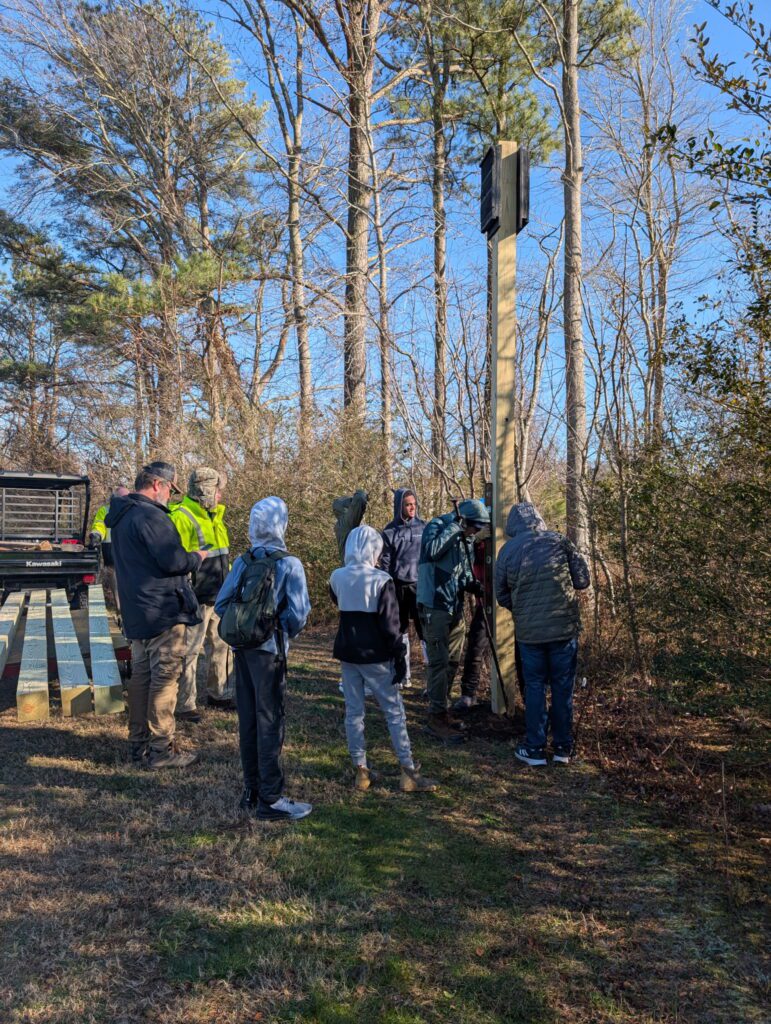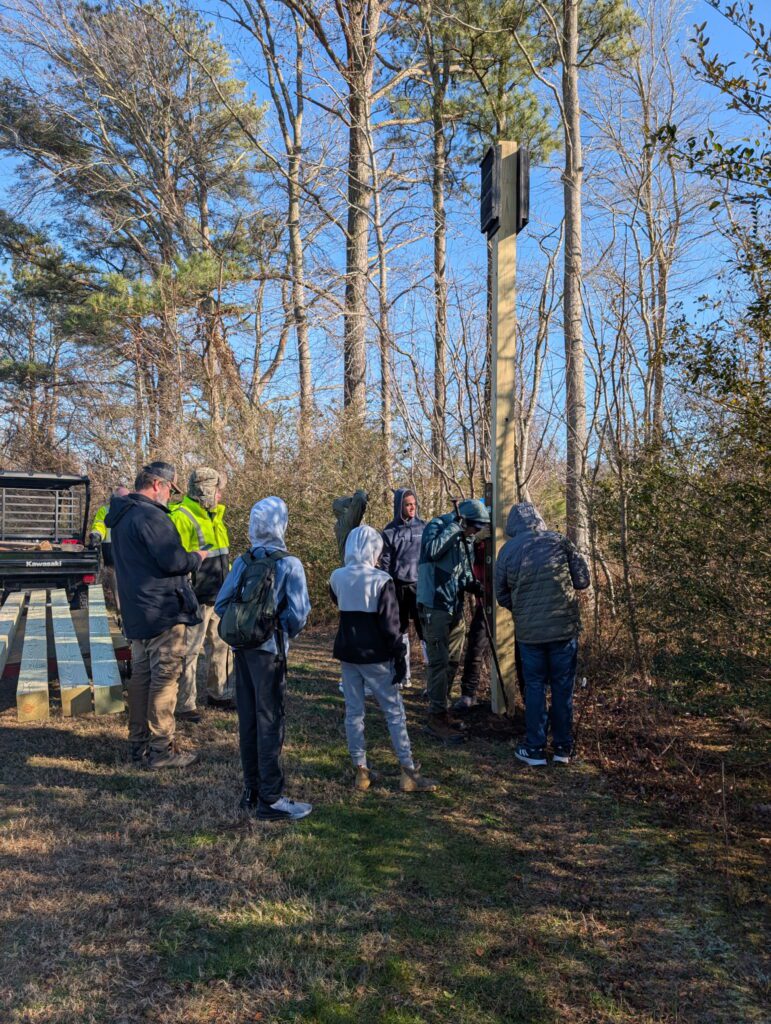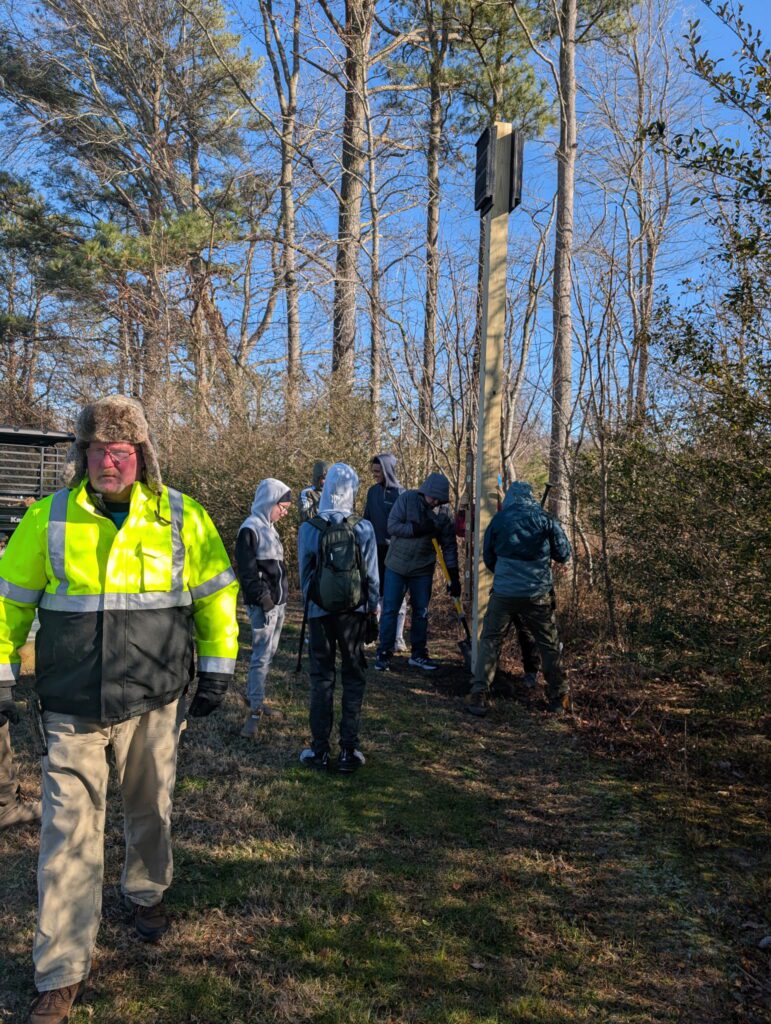

Boy Scout Adam Jennings created bat houses to place around Evans Park. This was his project towards his Eagle Scout Award. To learn more about Bat Houses, read below.
Bat Houses: Supporting Nature’s Nighttime Helpers
Bat houses are man-made shelters designed to provide bats with safe places to roost. As natural habitats disappear due to development, agriculture, and tree removal, bat houses help replace lost roosting sites and support healthy bat populations.
What Is a Bat House?
A bat house is a narrow, enclosed structure—usually mounted on a pole or building—that mimics the warm, protected spaces bats naturally seek, such as tree cavities or rock crevices. Inside, textured surfaces allow bats to cling comfortably while resting during the day.
Why Do We Build Bat Houses?
Many bat species rely on specific roosting conditions that are becoming increasingly rare. Bat houses are built to:
- Compensate for habitat loss
- Provide safe, predator-free shelter
- Support maternity colonies where female bats raise their young
- Encourage bats to live in areas where they benefit both ecosystems and people
Benefits of Bat Houses
Natural Pest Control
Bats are incredibly effective insect predators. A single bat can eat thousands of mosquitoes and agricultural pests in one night, reducing the need for chemical pesticides.
Healthy Ecosystems
By controlling insect populations, bats help protect crops, forests, and waterways. Their presence contributes to balanced, resilient ecosystems.
Agricultural Support
Farmers benefit from bats’ appetite for crop-damaging insects, which can improve yields and lower pest management costs.
Biodiversity Conservation
Bat houses help conserve bat species, many of which are threatened by habitat loss, disease, and climate change.
Educational and Community Value
Installing bat houses encourages environmental stewardship and provides opportunities to learn about wildlife and conservation.
Where and How Bat Houses Are Used
Bat houses are commonly installed in parks, backyards, farms, nature reserves, and school grounds. When placed correctly—at the right height, with proper sun exposure, and away from disturbances—they can become long-term homes for local bat populations.
A Simple Action with a Big Impact
Building and installing bat houses is a practical, low-cost way to support wildlife while benefiting human communities. By welcoming bats, we help protect ecosystems, reduce pests naturally, and ensure these important animals continue to thrive.